blogs
Home | Blogs | Computational Thinking Ai Skills For Students
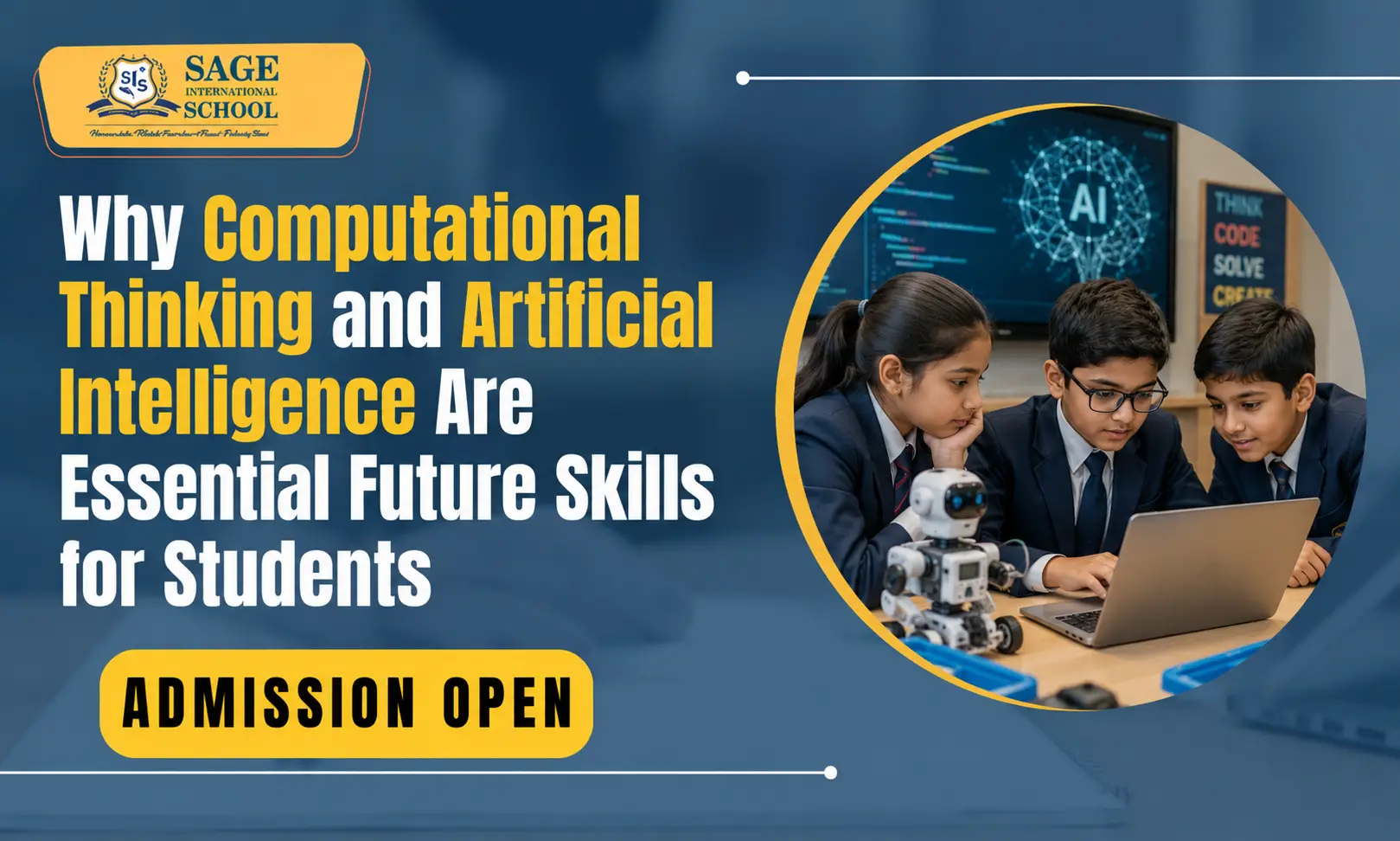
Quick Summary: The future of education relies on equipping students with two core mental frameworks: Computational Thinking (problem-solving methodology) and Artificial Intelligence Literacy (understanding and building smart systems). Together, these skills transition students from passive tech consumers into active, ethical future innovators.
The world is changing faster than ever before, and education must keep up with that change. As technology continues to transform every aspect of our lives, schools must prepare students with the knowledge and skills they need to succeed in an increasingly digital landscape.
Two concepts have become central to modern education: computational thinking and artificial intelligence (AI). While computational thinking helps students solve problems logically and creatively, artificial intelligence enables machines to learn from data and perform tasks that traditionally required human intelligence. Together, these skills prepare students to become critical thinkers, responsible digital citizens, and future innovators.
At its heart, computational thinking is a systematic, practical way of approaching problems. Rather than rushing to find an immediate answer, students learn to pause, understand the underlying situation, and solve it step by step.
Computational thinking relies on four core elements:
| Core Element | Educational Focus |
|---|---|
| Decomposition | Breaking complex, large problems down into smaller, manageable parts. |
| Pattern Recognition | Identifying trends, similarities, and relationships within data sets. |
| Abstraction | Stripping away unnecessary details to focus solely on the vital information. |
| Algorithmic Design | Developing structured, logical, step-by-step solutions to address the issue. |
Rather than being limited to computer programming, computational thinking develops analytical and creative skills that students can apply throughout their entire academic and professional journeys.
One of the greatest strengths of computational thinking is its universal application across fields. For instance, a student conducting a chemistry experiment carefully follows a precise sequence of steps and looks for patterns in the reaction results. Similarly, a student planning a school event organizes tasks systematically and creates backup plans for unexpected logistical challenges.
Whether students are studying mathematics, history, literature, or visual arts, computational thinking helps them transform into better problem-solvers, structured decision-makers, and independent innovators.
Alongside computational thinking, artificial intelligence (AI) has emerged as one of the most disruptive and transformative technologies of our era. AI already shapes the way we communicate, research, shop, receive healthcare, and navigate our cities.
As artificial intelligence in education continues to expand, students must move beyond simply using these interfaces blindly. They need to understand how intelligent systems work fundamentally. Learning the underlying mechanics of AI turns students into informed users who can critically evaluate both its powerful opportunities and structural limitations.
Artificial intelligence holds the potential to make everyday learning deeply personalized and adaptive. Every physical classroom consists of students who process information at entirely different speeds and through different learning styles.
AI-driven educational tools can continuously evaluate performance, discover precise learning gaps, deliver immediate constructive feedback, and assist teachers in curating highly focused intervention strategies. This creates a supportive sandbox for students while freeing educators from administrative tasks so they can focus on hands-on mentoring, creative tracking, and meaningful human connection.
Introducing fundamental AI concepts early demystifies the systems that youth interact with daily. Through safe, age-appropriate platforms, students can confidently explore deep technological branches, including:
As students study artificial intelligence, they must simultaneously build a robust understanding of digital ethics and societal responsibility. Technology must remain a tool that serves human equity, safety, and well-being.
"Discussions centered around user privacy, data bias, structural fairness, transparency, and accountable engineering help students grasp the social impact of automation. It prepares them to create solutions that solve problems while preserving human values."
Combining structural computational processes with the dynamic world of machine learning helps build the exact attributes modern universities and industries demand.
This overlapping educational model natively grows a suite of essential professional skills:
In a fluid job market, isolated technical knowledge can grow outdated quickly. Employers are intentionally seeking candidates who can untangle ambiguous problems, communicate systemic solutions smoothly, and pick up emerging technologies fast.
By blending computational thinking with general AI literacy, students build an evergreen skill set that supports careers across biomedical engineering, finance, research sciences, entrepreneurship, arts, and public policy.
As artificial intelligence reshapes global economies, the core foundations of school curricula must evolve in tandem. Educational institutions carry a civic responsibility to guide students in understanding how tools operate, how to use them safely and responsibly, and how to harness them to address systemic real-world problems.
Integrating computational thinking and AI architecture into core education ensures that graduating classes are not mere passive consumers of automation—but the creators, ethical designers, and innovative leaders driving the future.
The future will not belong simply to those who know how to type instructions into a prompt. It will belong to the thinkers who understand the system, question its mechanics, optimize its performance, and direct it ethically toward making human lives better.
The future belongs not only to those who use technology, but to those who understand, create, and innovate with it.