blogs
Home | Blogs | How Cbse Schools Prepare Students For Artificial Intelligence

For many years, Artificial Intelligence was viewed as a futuristic concept something limited to science fiction or the vision of technology leaders. Today, AI has become an integral part of everyday life, powering search engines, recommendation systems, healthcare diagnostics, autonomous vehicles, and even modern educational platforms. As intelligent systems are increasingly adopted across industries, the demand for skilled AI professionals is growing at an unprecedented pace.
To address this rising demand, Indian schools particularly those affiliated with the Central Board of Secondary Education are moving away from traditional, rote-based teaching methods. The focus is shifting toward experiential learning, digital tools, and real world problem solving. Integrating Artificial Intelligence into school education is not just about exam preparation; it is about equipping students with skills that extend far beyond the classroom.
AI education does not aim to turn every student into a data scientist. Instead, it focuses on developing adaptable competencies such as critical thinking, analytical reasoning, creativity, and technological awareness. This shift emphasizes learning by application rather than memorization, encouraging students to explore concepts beyond textbooks and engage meaningfully with the technology-driven world around them.
In the coming years, the world of work and technology is expected to undergo significant transformation. Industries such as healthcare, agriculture, finance, and entertainment are being rapidly reshaped by Artificial Intelligence and automation. Instead of preparing students for repetitive tasks, schools must equip them with the ability to solve new and complex problems that have never existed before.
This is why AI education in CBSE Schools has evolved from being an optional subject to a strategic educational initiative. By introducing Artificial Intelligence at the secondary level, CBSE schools help students:
1) Understand how algorithms influence everyday decisions
2) Analyze and interpret data responsibly
3) Identify ethical challenges related to emerging technologies
4) Develop strong logical and analytical thinking skills
Artificial Intelligence also promotes interdisciplinary learning within the CBSE curriculum. AI-based projects integrate concepts from mathematics, statistics, coding, environmental science, and social sciences, enabling students to approach problems holistically rather than through isolated subject silos.
Additionally, early exposure to AI reduces fear and complexity associated with advanced technologies. When students work with AI tools in a structured classroom environment, they develop confidence, curiosity, and a positive attitude toward innovation instead of hesitation or intimidation.
CBSE schools play a crucial role in integrating Artificial Intelligence into mainstream education through a structured and standardized framework. The inclusion of AI modules, project-based learning, and digital assessments ensures consistency and academic credibility.
The CBSE curriculum now recognizes AI as a core future skill, encouraging schools to design AI learning pathways that include:
1) Fundamentals of machine learning
2) Basics of data science and analytics
3) Practical coding and algorithmic thinking
4) Responsible AI practices and digital ethics
More importantly, AI education is transforming student mindsets by encouraging:
1) Inquiry-based learning instead of rote memorization
2) Experimentation and innovation
3) Collaborative problem-solving
4) Critical and ethical use of technology
Preparing students for AI-driven careers requires far more than a single textbook chapter. It involves progressive skill development that evolves with age, academic level, and technological exposure. CBSE schools are therefore focusing on layered competency-building through applied and experiential learning models.
1. Computational Thinking for AI
Students are taught to break complex problems into smaller, logical steps. This foundational skill is essential for algorithm design, programming, and machine learning applications.
2. Coding Proficiency
CBSE schools introduce coding in a phased manner—from block-based programming in middle school to Python programming and data analytics in higher classes. This approach ensures gradual skill mastery and long-term confidence in programming.
3. Data Literacy and Analysis
Students learn how to collect, clean, analyze, and interpret data responsibly. Data literacy enables learners to understand how AI systems make decisions and how data-driven insights are generated.
4. Robotics and Automation
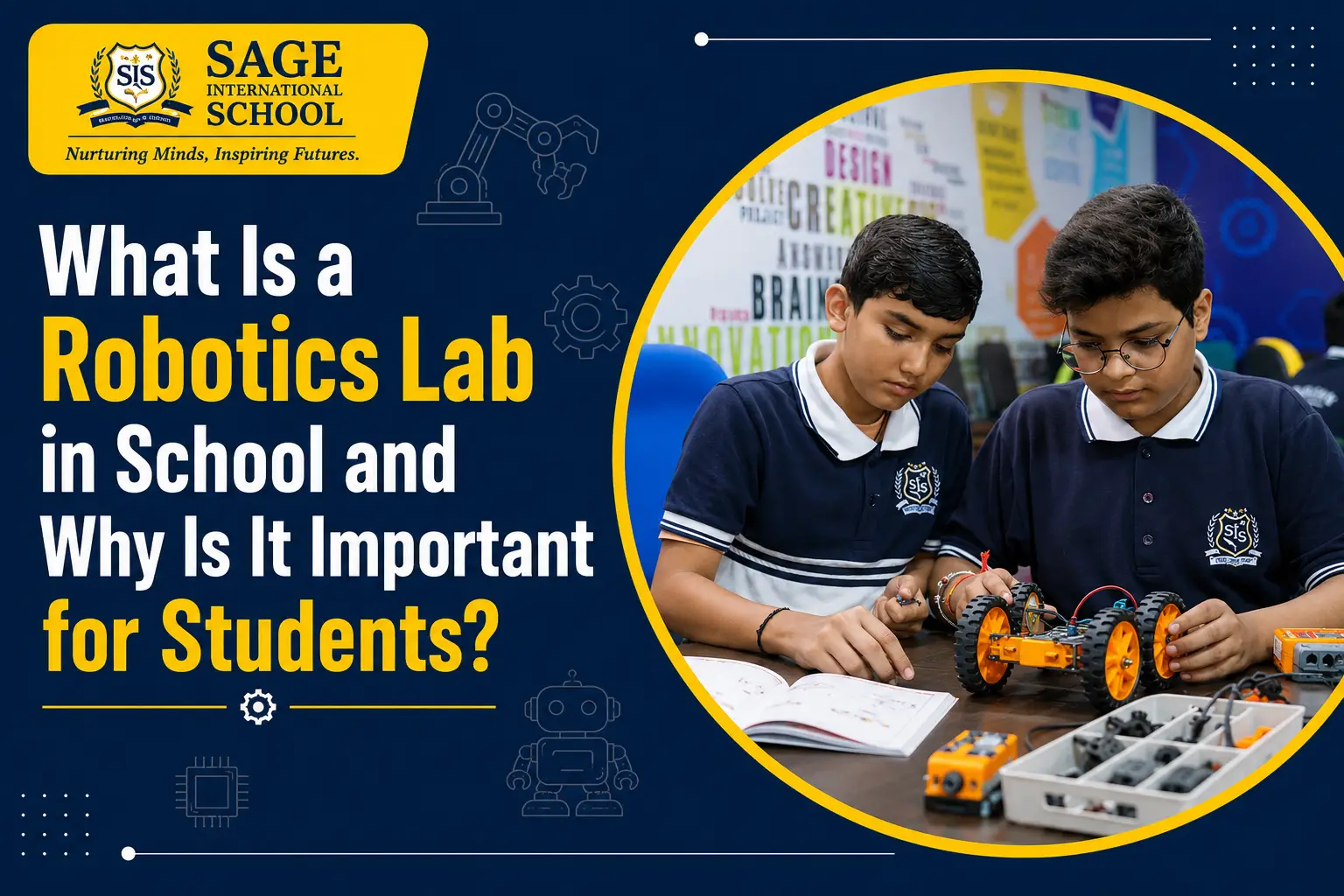
Through hands-on experience with sensors, microcontrollers, and automation kits, students build and program physical systems in robotics labs. This practical exposure helps them understand how Artificial Intelligence operates in real-world environments.
5. Ethical Awareness in Artificial Intelligence
As AI increasingly influences privacy, decision-making, and social outcomes, CBSE schools emphasize responsible technology use. Students engage in discussions around bias, transparency, fairness, and accountability in AI systems.
Through structured AI programs and applied learning approaches, CBSE schools guide students from foundational concepts to advanced applications. Participation in hackathons, coding competitions, and interdisciplinary technology projects provides learners with exposure to real-world problem-solving and industry-like environments.
Together, these initiatives prepare students for future careers in Artificial Intelligence, including machine learning engineering, data science, AI ethics consulting, robotics engineering, and intelligent system design.
Introducing Artificial Intelligence, coding, and robotics during the formative school years delivers measurable academic, cognitive, and career-oriented benefits. Early exposure helps students build a strong foundation for future learning and innovation.
Enhanced Problem-Solving Skills
AI-based projects require pattern recognition, logical sequencing, and structured thinking. As a result, students become more analytical, solution-oriented, and confident in handling complex problems.
Improved Creativity and Innovation
Contrary to the belief that AI is purely technical, it encourages creativity and design thinking. Students work on innovative applications such as smart waste management systems, AI-driven health monitoring tools, and sustainable technology solutions.
When students engage with AI at an early stage, they gain clarity about future careers in Artificial Intelligence and related technology sectors. This awareness supports informed academic and career decisions in high school and higher education.
Confidence in Using Technology
Hands-on learning experiences reduce digital anxiety and build technological confidence. Students evolve from passive users of digital tools into active creators, developers, and innovators.
Alignment with Global Education Standards
Global education systems increasingly emphasize AI literacy and STEM education. By strengthening AI, coding, and robotics programs in CBSE schools, Indian institutions ensure students remain competitive at an international level.
Early exposure to AI also nurtures entrepreneurial thinking. Students who understand automation and machine learning are more likely to conceptualize start-ups, develop technology prototypes, and pursue research-based initiatives.
The rapid advancement of Artificial Intelligence is reshaping industries at an unprecedented pace. Schools that fail to adapt to this transformation risk leaving students unprepared for the future. Recognizing this shift, CBSE schools are actively bridging the gap through curriculum updates, experiential learning models, and the integration of emerging technologies.
By embedding Artificial Intelligence into the CBSE curriculum, schools are nurturing analytical thinkers, ethically responsible technologists, and innovative problem-solvers. AI learning is becoming increasingly hands-on and practical through interdisciplinary projects, coding programs, robotics labs, and real-world applications that extend beyond traditional classroom boundaries.
The objective of AI education is not merely to produce engineers, but to develop adaptable, flexible, and future-ready individuals who can thrive in AI-driven careers as well as roles that do not yet exist. These skills empower students to navigate uncertainty, embrace innovation, and contribute meaningfully to a rapidly evolving global economy.
Sage International School serves as a strong example of how a progressive vision and innovative teaching approach can redefine modern education. Schools that prioritize smart learning, ethical technology use, and experiential education today are shaping the confident leaders and changemakers of tomorrow.
Ready to shape your child’s future with AI-driven education? Apply Now at Sage International School, Bhopal