blogs
Home | Blogs | Robotics Lab In School Importance Benefits
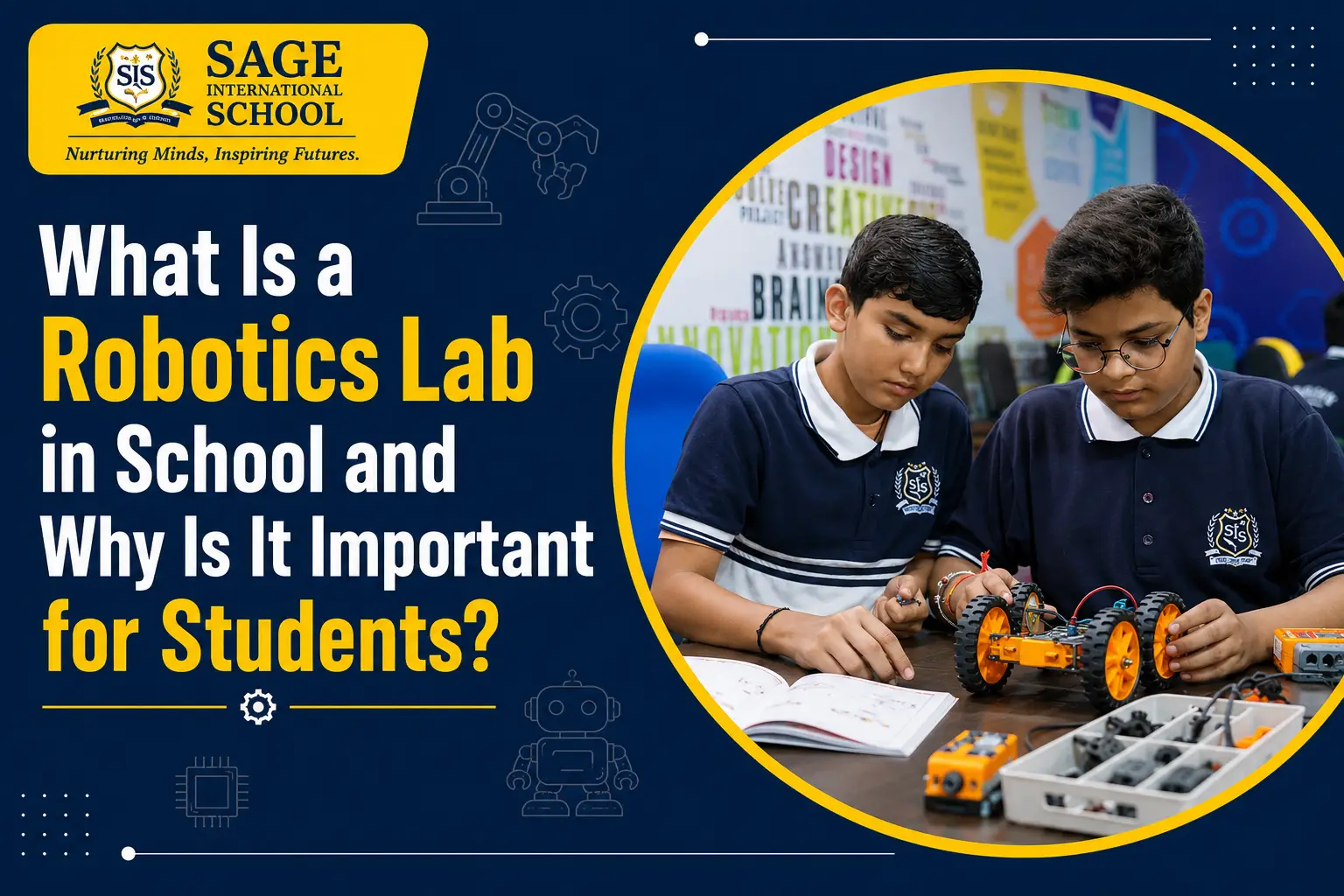
A robotics lab in school is a dedicated learning space where students explore robotics, coding, electronics, engineering and automation through hands-on projects. Instead of only reading about how technology works, students can design, build, program and test working robotic systems.
The importance of robotics in education comes from this practical approach to learning. When students work on robotics projects, they learn to plan, experiment, identify mistakes and improve their ideas. These skills can remain valuable even if they eventually choose a career outside technology.
A robotics lab also gives parents a practical way to introduce children to STEM (Science, Technology, Engineering and Mathematics) from an early age. More importantly, students get the opportunity to learn by doing, making mistakes and trying again.
A school robotics lab enables students to learn about the design, construction and programming of automated systems. It brings together concepts from coding, electronics, mechanics, science and mathematics in a practical and accessible way.
A robotics lab may include:
| Robotics Lab Equipment | What Students Learn |
|---|---|
| Robotics kits | Building and prototyping |
| Motors and wheels | Movement and mechanics |
| Sensors | Detection and automation |
| Electronic components | Basic electronic systems |
| Microcontrollers | Controlling robotic systems |
| Programming tools | Coding and logical instructions |
| Robotic arms | Movement and automation |
| Computers or programming devices | Programming and testing |
| Building materials | Design and experimentation |
The equipment available will depend on the age and learning needs of the students. Younger students may work with simple construction and programming kits, while older students can explore more advanced electronics, coding and automation.
A robotics lab offers more hands-on learning than a regular technology classroom. Students learn what a motor or sensor does by actually using it. Instead of simply being told how a component works, they can see the result of applying it.
A school robotics lab generally follows a simple learning cycle:
Students are first presented with a problem or challenge. They may be asked to design a solution independently or work in small groups.
Once they have an idea, students build their robot and program it to perform a particular task. They then test the robot and observe what happens.
For example, students may be asked to design a robot that follows a defined path. They might need to decide where to place path sensors, build the robot and create instructions that allow it to follow the route.
If the robot moves away from the path, students investigate the reason. The problem could be related to the sensor position, the design or the program. They then make changes and test the robot again.
This process teaches an important lesson: a failed attempt does not necessarily mean failure. It can be part of finding a better solution.
Robotics combines technical knowledge with skills that students can use across different areas of education and everyday life.
Students learn how instructions can control a machine. Depending on their age and experience, they may begin with block-based programming and gradually move towards text-based coding.
Students learn how components such as sensors, motors, controllers and other electronic parts work together to perform a task.
Building a robot introduces students to movement, structure, balance, gears, wheels and other mechanical concepts.
Robotics challenges require students to identify a problem, divide it into smaller parts and find a workable solution.
Programming requires instructions to be given in the correct order. This encourages students to think systematically and understand cause and effect.
Robotics projects are often completed in groups. Students discuss ideas, divide responsibilities, solve disagreements and make decisions together.
There may be several ways to solve the same robotics challenge. Students can experiment with different designs rather than following only one fixed answer.
A robotics lab is important because it turns theoretical learning into practical experience. Students can apply concepts from mathematics, science, technology and engineering while working on projects they can see, control and improve.
It also encourages students to become active participants in the learning process. Instead of waiting for a teacher to provide the correct answer, students have to make decisions, test their ideas and understand the results.
For parents, this practical approach can be valuable because robotics develops skills that are useful beyond a particular project. A child may forget exactly how a specific robot was assembled, but the ability to approach a problem logically, work with others and keep improving a solution can remain useful throughout their education.
The benefits of robotics education extend beyond learning how to build or program a machine.
Robotics activities can be adapted according to students' age, experience and learning objectives. Some common robotics projects include:
The complexity of these activities can increase as students gain experience. The goal should not simply be to finish a project. The real value comes from understanding the concept, testing ideas and learning how to improve the result.
Robotics can be introduced at different stages of a student's education.
| Student Level | Examples of Robotics Learning |
|---|---|
| Primary School | Simple construction, movement and age-appropriate programming |
| Middle School | Sensors, coding and basic autonomous robots |
| Secondary School | Advanced programming, electronics, automation and complex projects |
The exact activities should depend on the student's age, prior experience and the school's curriculum.
Robotics brings together the four areas of STEM: Science, Technology, Engineering and Mathematics.
Science helps students understand concepts such as force, movement, energy and motion.
Technology introduces students to programming, electronics and digital systems.
Engineering comes into play when students design, build, test and improve a robot.
Mathematics supports measurements, calculations, patterns and logical reasoning.
For example, a student building a robot may need to calculate measurements, understand how its wheels move, position a sensor correctly and write instructions for the robot. Several academic concepts can therefore come together within one project.
This is one reason why the importance of robotics in education goes beyond teaching students how to operate technology. It encourages them to understand how different areas of knowledge work together.
Robotics can introduce students to areas such as engineering, computer science, electronics, automation, artificial intelligence and product design.
However, learning robotics does not mean that every student needs to become an engineer or work in technology.
The larger benefit is exposure to skills such as:
Not every student will choose a technology-related career, and that is completely fine. The value of robotics education also lies in giving students the opportunity to design something, turn an idea into a working model and understand what happens when their first attempt does not work.
Through robotics, students can develop a working understanding of how different technologies operate. It can also help them discover their interests and become more confident in approaching unfamiliar problems.
For parents, early exposure to different areas of learning can help children understand their interests before they have to make important academic or career decisions.
At SAGE International School, Bhopal, practical and activity-based learning can give students opportunities to explore concepts beyond the traditional classroom environment.
A robotics lab can provide students with a design-focused space where they can build projects, experiment with technology, learn programming and test their ideas.
For students, the experience is not only about producing a working robot. The real learning happens while deciding how to build it, understanding why something did not work, identifying the problem, making corrections and testing the project again.
This approach encourages students to become active learners. They are not simply following instructions; they are making decisions, experimenting with ideas and learning from the results.
A school environment that combines classroom learning with practical experiences such as robotics can help students develop technology awareness alongside problem-solving, creativity, collaboration and logical thinking.
For parents looking for a school that provides opportunities for practical, technology-integrated learning, robotics can be an important part of the overall learning experience.
A robotics lab in school is a dedicated learning space where students explore robotics, coding, electronics, mechanics and automation through practical activities and projects.
The purpose of a robotics lab is to give students hands-on experience with technology while developing problem-solving, logical thinking, creativity, teamwork and STEM-related skills.
Students may build robots, program them, work with sensors and motors, test automated systems and participate in robotics challenges or projects.
Robotics education can help develop problem-solving, logical thinking, creativity, teamwork, patience, persistence, coding awareness and practical understanding of STEM concepts.
Yes. Robotics can be introduced at different levels. Younger students can begin with simple construction activities and age-appropriate programming, while older students can work on more complex projects.
No. Beginners can start with basic programming activities. Schools can gradually introduce more advanced coding as students become comfortable with robotics concepts.
A school robotics lab may include robotics kits, motors, wheels, sensors, electronic components, microcontrollers, programming devices, robotic arms and prototyping materials. The equipment varies according to the age and learning requirements of students.
Common projects include line-following robots, obstacle-avoiding robots, robotic arms, automated traffic systems, smart-home models and object-detection robots.
Robotics connects science, technology, engineering and mathematics through practical projects. Students can apply concepts from several subjects while designing, building and testing a working system.
Robotics gives students opportunities to identify problems, test possible solutions, analyse what went wrong and make improvements. This encourages students to approach challenges systematically rather than immediately looking for an answer.
A computer lab generally focuses on using computers and software, while a robotics lab combines programming with physical components such as sensors, motors, controllers and mechanical structures. Students can therefore see how their code affects a physical system.
No. Robotics is an educational activity, not a commitment to a particular career. The problem-solving, creativity, teamwork and logical-thinking skills developed through robotics can be useful in many fields.
Robotics gives children an opportunity to learn through experimentation. It can help them become more comfortable with technology while developing practical skills such as problem-solving, teamwork, creativity, logical thinking and persistence.
Robotics labs in schools give students the opportunity to move from learning about technology to learning by doing. Students can use their knowledge of science, mathematics and technology to build and test robotic designs while learning how programming and physical systems work together.
The value of robotics education is not limited to producing a working robot. Students also learn how to approach a problem, test an idea, understand mistakes and improve their solution.
These experiences can help children become more confident learners and develop skills that remain useful across different areas of education and life.
At SAGE International School, Bhopal, practical and technology-integrated learning can give students opportunities to explore robotics while developing skills beyond what is taught through conventional classroom learning.
For students, the most important outcome may not be the robot they build. It may be the confidence they gain from discovering that they can take an idea, test it, learn from what went wrong and try again.