blogs


Home | Blogs | Raksha Bandhan Significance History School Celebration Ideas
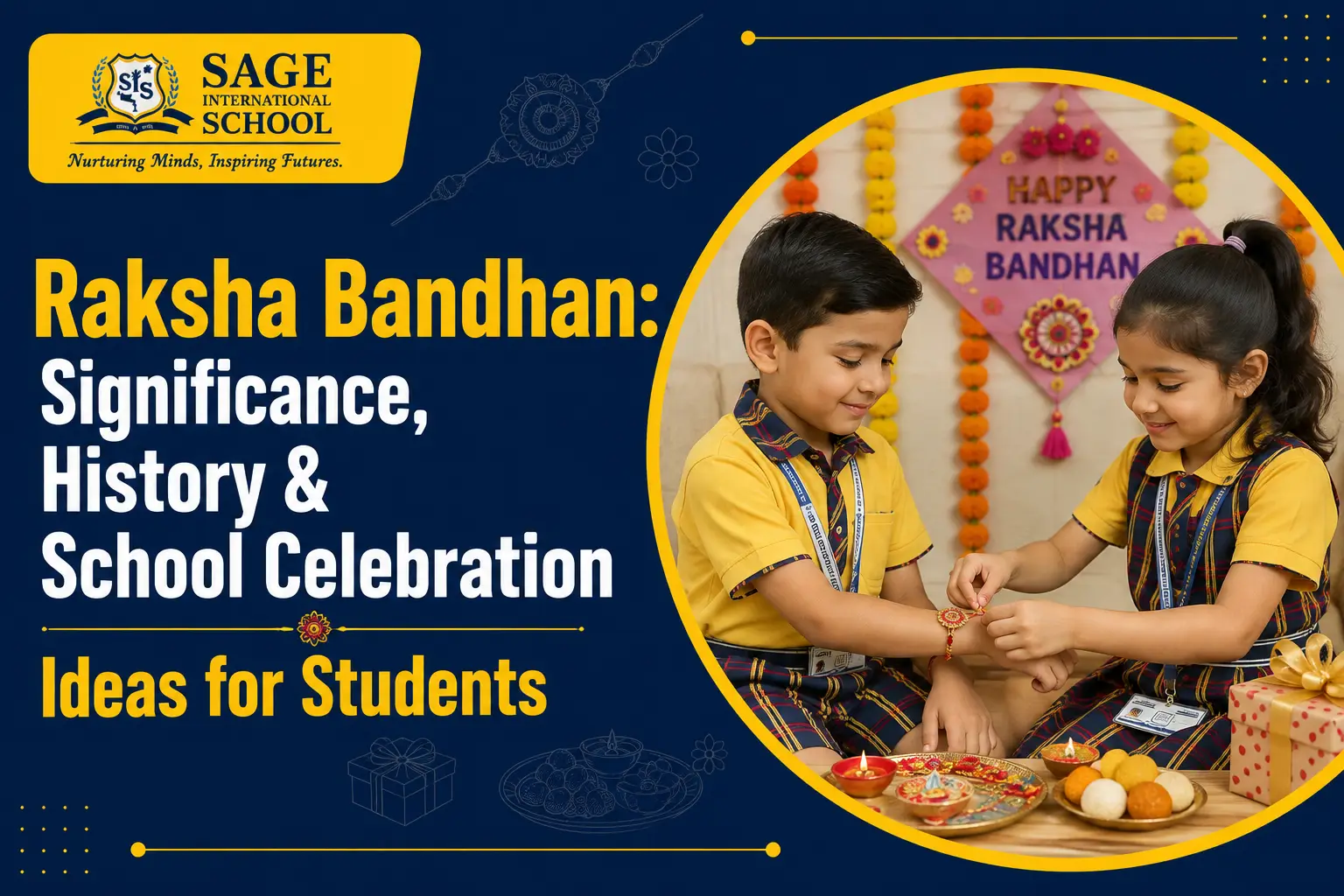


Raksha Bandhan: Significance, History & School Celebration Ideas


India is a country of various festivals, each with a story to tell and a lesson to teach. One such festival is Raksha Bandhan, which celebrates the wonderful relationship between brother and sister. Raksha Bandhan is not merely about tying a thread around one’s wrist; it is about expressing mutual feelings of love, gratitude, and care in life.

Celebrated on the full moon day of the Hindu month of Shravan (Shravan Purnima), Raksha Bandhan brings families together and gives everyone a reason to pause from their busy routines and celebrate their relationships. For school students, the festival offers an opportunity to understand Indian traditions and develop values such as respect, responsibility, compassion, and togetherness.

What is Raksha Bandhan?

Raksha Bandhan literally translates to a “bond of protection.” On this day, sisters tie a sacred thread, known as a rakhi, around their brothers’ wrists. The brother traditionally promises to protect and support his sister, while the sister wishes for his happiness, success, and well-being.

The Evolving Meaning of the Bond

Protection is no longer understood as a one-sided responsibility. Today, siblings support each other emotionally, stand up for one another, celebrate each other’s achievements, and remain connected through difficult times. The rakhi, therefore, represents trust, affection, respect, and a relationship that grows stronger with time.

5 Famous Raksha Bandhan Stories for Kids with Valuable Lessons

Storytelling is one of the best ways to teach young children about cultural roots. Here are five inspiring legends associated with Raksha Bandhan and the timeless life lessons they offer:

1. Lord Krishna and Draupadi (The Mahabharata)

Once, Lord Krishna injured his finger, and seeing him bleed, Draupadi immediately tore a piece of her saree and tied the cloth around his finger to stop the bleeding. In response to her deep affection, Krishna promised to protect her whenever she needed him — a vow he famously honored during her moments of hardship.
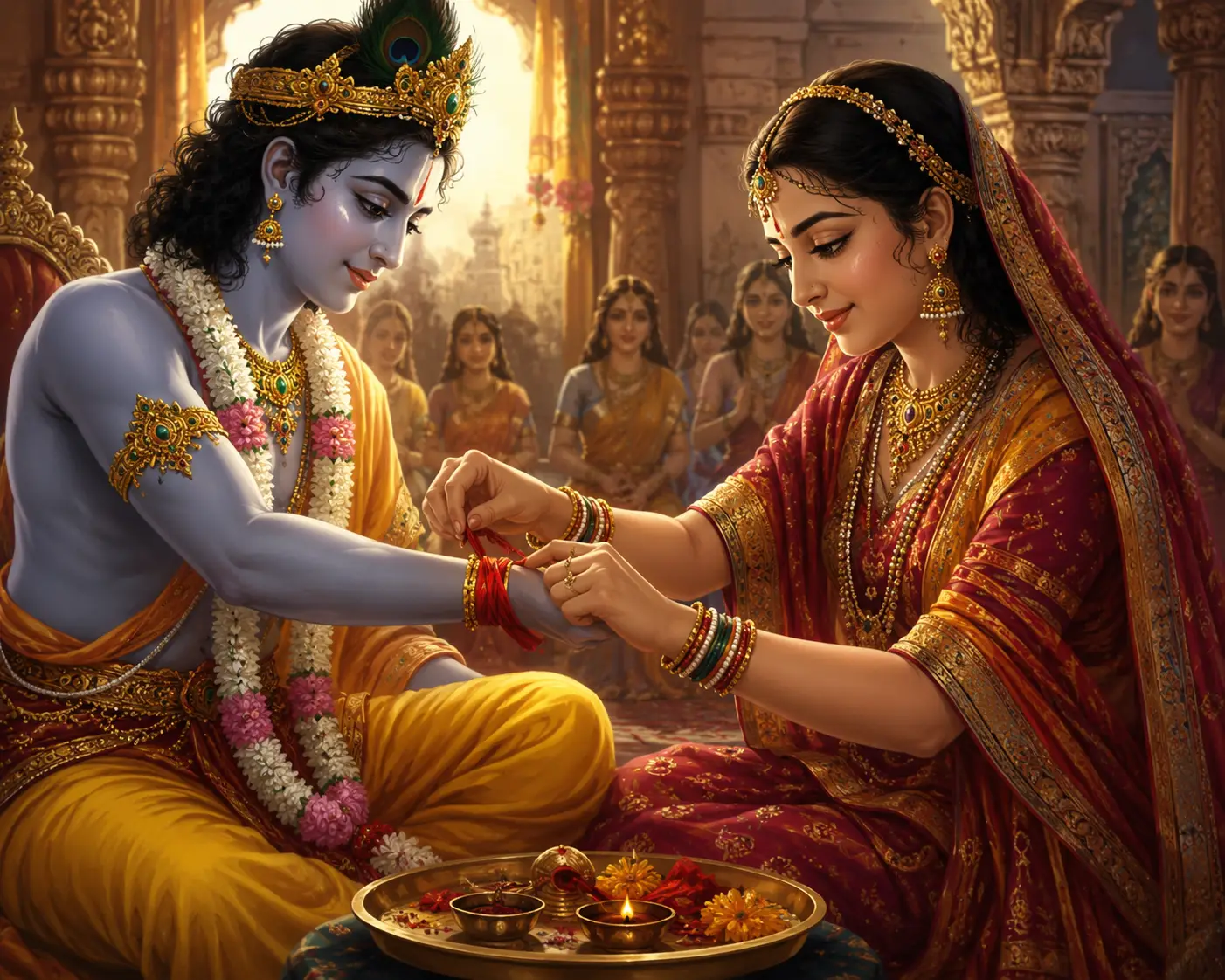
Lord Krishna and Draupadi (The Mahabharata)

Valuable Lesson: True protection and support stem from genuine love, empathy, and readiness to help without hesitation.


2. Rani Karnavati and Emperor Humayun

According to a popular historical account, Rani Karnavati of Mewar sent a rakhi to Mughal Emperor Humayun seeking protection during a time of crisis. Humayun accepted the symbolic relationship created by the rakhi and honored the sacred bond.
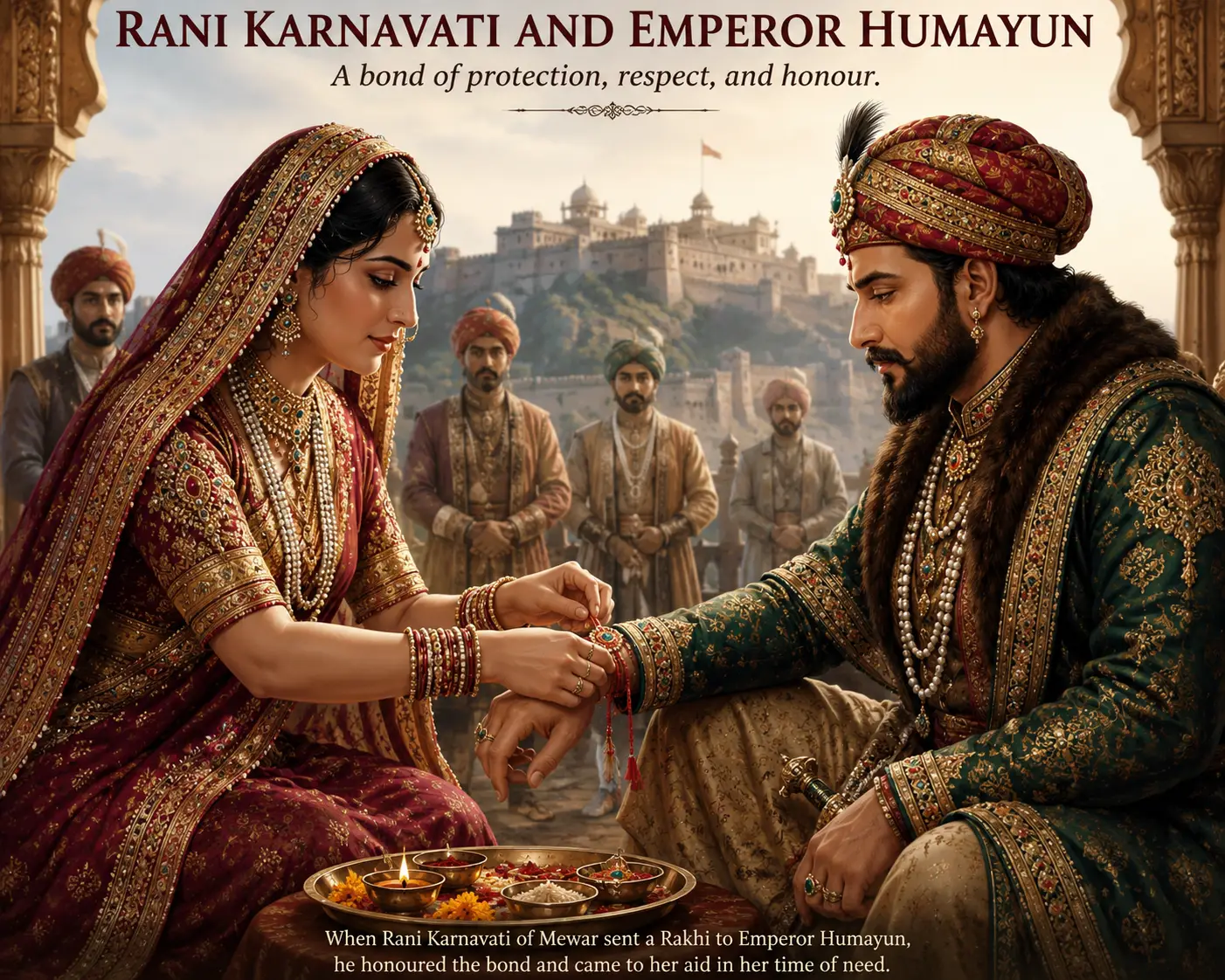
Rani Karnavati and Emperor Humayun

Valuable Lesson: Trust, honor, and mutual respect transcend political, religious, and cultural boundaries.
 

3. Goddess Lakshmi and King Bali

According to Puranic tradition, Lord Vishnu agreed to guard King Bali's kingdom in the netherworld (Patala). Wishing for her husband’s return to Vaikuntha, Goddess Lakshmi visited Bali disguised as a poor woman, tied a protective thread on his wrist on Shravan Purnima, and accepted him as a brother. When Bali offered her a gift in return, she asked for Lord Vishnu's release, which Bali happily granted.

Valuable Lesson: Selfless kindness, hospitality, and pure intentions can resolve any difficulty with peace and goodwill.

4. Lord Ganesha and Santoshi Mata

Lord Ganesha’s sons, Shubh and Labh, watched their aunt tie a rakhi on Ganesha’s wrist and wished for a sister of their own. Recognizing their sincere desire for sibling companionship, Lord Ganesha created Goddess Santoshi (the Goddess of Contentment and Satisfaction) from divine flames.

Valuable Lesson: Sibling companionship brings harmony, joy, and emotional fulfillment to a household.

5. Yama and the River Yamuna

Yamuna, the river goddess, had not seen her brother Yama (the god of death) for a long period. When Yama finally visited her, she welcomed him warmly, performed his aarti, and tied a sacred thread around his wrist. Moved by her unconditional warmth, Yama granted a boon of long life to any brother who receives a rakhi from his sister on this day.

Valuable Lesson: Taking out time for family and expressing love keeps relationships everlasting.

Creative Raksha Bandhan Craft Activities for Preschool

For toddlers and kindergarten learners, hands-on craft activities develop fine motor skills and sensory engagement while introducing cultural traditions:

  • Pasta & Cereal Rakhis: Little children can string wheel-shaped pasta (rotelle) or colorful breakfast cereal loops onto soft yarn to build hand-eye coordination.
  • Foam Sticker & Wool Bands: Pre-cut colorful felt or EVA foam shapes (stars, flowers, smiley faces) that toddlers can easily stick onto soft wool ribbons.
  • Fingerprint Art Rakhis: Toddlers dip their thumbs in non-toxic washable paints on round cardstock cutouts to create flower or butterfly patterns.
  • Seed & Grain Paper Bands: Sticking lentils, chickpeas, and melon seeds onto circular cardboard bases using safe, non-toxic cornstarch paste.
  • Button & Satin Ribbon Rakhis: Using large, child-safe colorful buttons glued neatly over pastel ribbons for a mess-free, bright craft.

How is Raksha Bandhan Celebrated? (Step-by-Step Ritual)

Raksha Bandhan is traditionally celebrated with a small, intimate family ceremony:

  • Preparing the Thali: Sisters prepare a decorated plate (thali) containing a rakhi, roli or kumkum, rice grains, sweets, and a diya.
  • Applying the Tilak & Aarti: The sister applies a tilak on her brother’s forehead, performs an aarti, and ties the rakhi around his wrist.
  • Exchanging Gifts & Promises: The brother gives his sister a gift and promises to support and care for her.
  • Sharing Sweets: The celebration concludes with sweets, family conversations, laughter, and photographs.
  • Modern / Long-Distance Celebrations: When siblings live in different cities or countries, rakhis and gifts are sent through courier services, while video calls allow families to celebrate together virtually.

Importance of Raksha Bandhan for Students

Festivals are an important part of a child’s learning beyond textbooks. Raksha Bandhan teaches students that relationships require care, understanding, and responsibility:

  • Respect for Relationships: It teaches children to value their family members and appreciate their presence.
  • Responsibility: The idea of protection encourages students to understand their duty towards others.
  • Empathy: Caring for siblings helps children understand another person’s feelings and needs.
  • Sharing and Cooperation: Celebrating together teaches children to share happiness and work together.
  • Cultural Awareness: Traditional celebrations help students understand India’s diverse cultural heritage.

Raksha Bandhan Celebrations in Schools

Schools can make Raksha Bandhan more meaningful by combining celebration with experiential learning. Students can participate in:

  • Rakhi-making competitions
  • Drawing and poster-making activities
  • Raksha Bandhan essay-writing competitions
  • Storytelling sessions and cultural programmes
  • Rakhi-making for soldiers
  • Special assemblies on the importance of relationships

Eco-Friendly Raksha Bandhan

Celebrating festivals responsibly is essential, as synthetic and plastic materials contribute to waste. Students can explore sustainable alternatives:

  • Sustainable Materials: Rakhis made from cotton, paper, jute, seeds, and fabric make celebrations eco-friendly.
  • Eco-Workshops: Schools can organize workshops where students create rakhis using reusable or biodegradable materials.
  • Tree-Rakhi Activity: Tying rakhis to trees as part of an environmental awareness campaign helps students understand that protecting nature is a shared responsibility.

Frequently Asked Questions (FAQs)

1. What is Raksha Bandhan?
Raksha Bandhan is an Indian festival that celebrates the bond of love, trust, care, and protection between siblings.
2. When is Raksha Bandhan celebrated?
Raksha Bandhan is celebrated on the full moon day of the Hindu month of Shravan, also known as Shravan Purnima.
3. What does tying a rakhi symbolise?
Tying a rakhi symbolises affection, trust, protection, and the promise of supporting one another.
4. Why should schools celebrate Raksha Bandhan?
Schools use Raksha Bandhan celebrations to help students connect with Indian traditions while developing empathy, respect, responsibility, and togetherness.
5. How can students celebrate an eco-friendly Raksha Bandhan?
Students can make rakhis using natural, reusable, or biodegradable materials such as cotton, jute, paper, fabric, and seeds.

Conclusion

Raksha Bandhan is much more than an annual tradition of tying a thread around a sibling’s wrist. It is a celebration of relationships and a reminder that love becomes meaningful when it is accompanied by care, respect, understanding, and responsibility. For students, the festival provides a simple yet powerful lesson: strong relationships are built through small acts of kindness and consistent support.

Sage International School encourages students to learn beyond academics by connecting education with culture, values, creativity, and responsible citizenship. Celebrations such as Raksha Bandhan provide students with meaningful opportunities to understand their heritage while developing into confident, compassionate, and responsible individuals.