blogs
Home | Blogs | Cbse Vs Ib National Vs International Schools
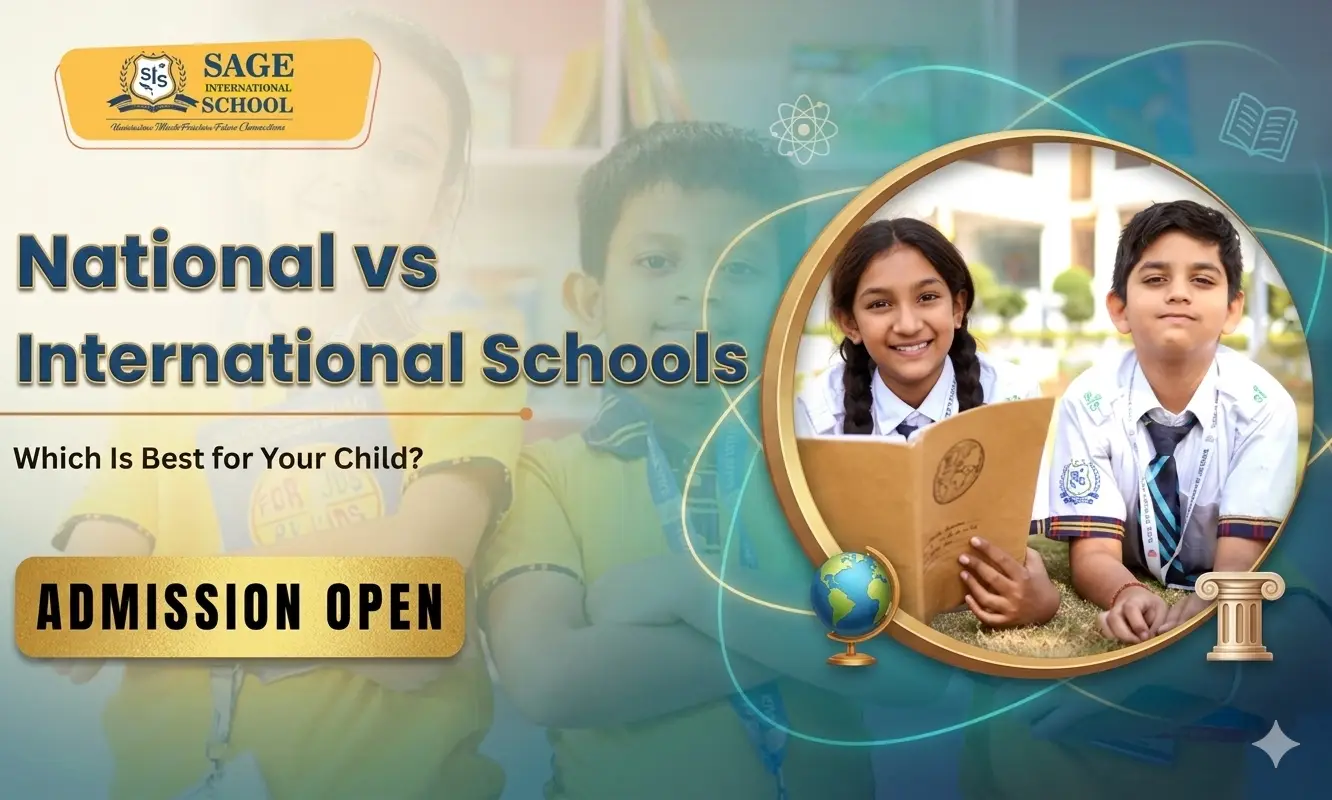
Choosing the right school for your child is one of the most important decisions parents make. Today, many families find themselves comparing national vs international schools to determine which education system will best support their child’s academic growth and future opportunities.
The decision between national school boards like CBSE or ICSE and international curricula such as IB or Cambridge IGCSE can significantly influence a child’s learning style, personality development, global exposure, and career prospects.
As education systems continue to evolve, the debate around national vs international school education in India has become more relevant than ever. While national schools offer a structured curriculum aligned with Indian competitive exams, international schools emphasize flexible learning, critical thinking, and global perspectives.
But how do parents decide which option is better? Is the choice simply about CBSE vs IB schools, or are there other important factors to consider?
This comprehensive school comparison guide for parents explores the key differences between national and international schools, including curriculum structure, teaching methods, academic recognition, fees, and career opportunities. Understanding these factors can help parents choose the educational environment that best aligns with their child’s learning style, aspirations, and future goals.
A national school follows a curriculum established by the country's educational authorities. In India, the most common national boards include:
1) CBSE (Central Board of Secondary Education)
2) ICSE (Indian Certificate of Secondary Education)
These schools are closely aligned with the Indian education system and are designed to prepare students for higher education and competitive examinations within the country.
One of the major advantages of CBSE schools is their standardized curriculum across India. This consistency allows students to transfer schools easily if their families relocate.
National schools typically focus on strong academic foundations in core subjects such as:
1) Mathematics
2) Science
3) Social Studies
Languages
The curriculum emphasizes conceptual clarity and structured learning, making it ideal for students preparing for competitive examinations like:
1) JEE
2) NEET
3) UPSC
Other professional entrance exams in India
For families seeking affordable and structured education, national schools remain a reliable option.
An international school follows globally recognized academic programs designed to prepare students for a globalized world. Popular international curricula include:
1) International Baccalaureate (IB)
2) Cambridge IGCSE
Other internationally recognized frameworks
Unlike traditional national schools, international schools emphasize inquiry-based learning, encouraging students to explore ideas, ask questions, and conduct research.
International schools focus on developing:
1) Critical thinking
2) Creativity
3) Collaboration skills
4) Global awareness
Assessment methods go beyond traditional examinations and may include:
1) Presentations
2) Research projects
3) Group discussions
4) Practical assignments
This learning environment helps students develop independent thinking and problem-solving skills, which are highly valued by universities worldwide.
The main difference between national and international schools lies in the curriculum structure and learning philosophy.
National Boards (CBSE / ICSE)
National boards typically follow a structured and syllabus-based curriculum.
Key characteristics include:
1) Standardized textbooks and learning materials
2) Clear academic progression
3) Emphasis on theoretical knowledge and conceptual understanding
4) Strong preparation for Indian competitive exams
This system provides stability and consistency in academic learning.
International boards follow a student-centered and flexible curriculum.
Key features include:
1) Inquiry-based learning
2) Interdisciplinary subjects
3) Research-driven assignments
4) Global perspectives in education
Students are encouraged to analyze, question, and apply knowledge rather than simply memorize information.
| Factor | National Schools (CBSE/ICSE) | International Schools (IB/Cambridge) |
| Curriculum | Structured syllabus | Flexible and inquiry-based |
| Teaching Style | Teacher-led | Student-centered |
| Focus | Exam preparation | Conceptual learning |
| Global Recognition | Moderate | High |
| Language Options | Limited | Multiple foreign languages |
| Fees | Affordable | Higher tuition fees |
Teaching methods differ significantly between national and international schools.
National schools traditionally follow a teacher-led classroom model.
Key characteristics include:
1) Syllabus-focused learning
2) Regular examinations and assessments
3) Structured study routines
4) Emphasis on academic discipline
Many modern CBSE schools are now incorporating digital tools, smart classrooms, and interactive teaching techniques.
International schools use a collaborative and interactive learning approach.
Teachers act as facilitators rather than lecturers, guiding students through:
1) Group discussions
2) Research projects
3) Debates
4) Presentations
This encourages students to become active participants in the learning process.
Both education systems are credible but offer different advantages.
National boards like CBSE are widely recognized across India and align closely with Indian university admission requirements.
Students pursuing careers in:
1) Engineering
2) Medicine
3) Law
4) Civil services
often benefit from the structured academic preparation offered by national schools.
International programs such as the IB Diploma are recognized by universities around the world. Many global institutions are familiar with the IB grading system and sometimes grant university credits for IB coursework.
For students planning to pursue higher education in countries such as the United States, United Kingdom, Canada, or Australia, international schools can provide additional advantages.
Must Read : Top 10 Benefits of Enrolling in SAGE International School, Bhopal
Education today extends beyond academics. Schools increasingly focus on holistic development, helping students build creativity, leadership skills, and emotional intelligence.
Extracurricular activities may include:
1) Sports programs
2) Music and performing arts
3) Cultural activities
4) Debate clubs
5) Community service programs
While many national schools provide extracurricular opportunities, international schools often integrate these activities more deeply into their educational framework.
Must Read - Why Extracurricular Activities Are Essential for Holistic Growth?
Language learning is another area where national and international schools differ.
National schools typically offer:
1) English
2) Hindi
3) Regional languages
International schools often provide a broader range of language options such as:
1) Spanish
2) French
3) German
4) Mandarin
Learning additional languages helps students develop cross-cultural communication skills and global awareness.
The education system a student follows can influence future career opportunities.
National education systems in India focus strongly on preparing students for competitive examinations and professional careers within the country.
International schools prepare students for global higher education opportunities by encouraging research, interdisciplinary learning, and analytical thinking.
When deciding between national and international schools, parents should consider their child’s long-term educational goals.
Modern schools increasingly integrate technology into learning environments.
Many leading national schools offer:
1) Smart classrooms
2) Science laboratories
3) Libraries
4) Sports facilities
International schools often feature advanced infrastructure such as:
1) Innovation labs
2) Performing arts centers
3) Digital research facilities
4) Technology-driven classrooms
However, infrastructure alone does not define educational quality. Strong teaching and supportive learning environments matter far more.
Schools such as Sage International School are known for their modern campus infrastructure, digital learning facilities, and student-focused environment, making them a strong contender among the best international school bhopal options for parents.
Before choosing between national and international schools, parents should evaluate several factors:
Child’s Learning Style
Some students thrive in structured environments, while others prefer exploratory learning.
Future Education Goals
Consider whether your child is likely to pursue higher education in India or abroad.
Budget
Education is a long-term investment, so choose a school that remains financially sustainable.
Location and Accessibility
Long travel times can affect a child’s daily routine and energy levels.
School Culture and Values
A positive school environment promotes confidence, independence, and discipline.
Teacher Quality
Experienced and passionate teachers play a major role in student success.
Peer Environment
Supportive peer groups can significantly influence a child’s development and motivation.
Question : Which is better: CBSE or IB schools?
Answer: CBSE schools are better suited for students preparing for Indian competitive exams, while IB schools focus on global education, research-based learning, and international university preparation.
Question : Are international schools better than national schools?
Answer: Not necessarily. The best choice depends on a child’s learning style, career goals, and family budget.
Question : Are international schools more expensive?
Answer: Yes, international schools typically have higher fees due to global curriculum accreditation, advanced infrastructure, and specialized faculty training.
Question : Which school system is best for studying abroad?
Answer: International programs such as IB or Cambridge are widely recognized by global universities and may offer advantages for students planning to study abroad.